
The Arm becomes a place to play
While Melville Island was a military prison, the rest of Halifax’s Northwest Arm became a place for people to relax.
Through the late 18th and early 19th centuries the Arm had been a place of industry, where water power drove mills and small fishing villages lined the shore. Much of Halifax’s grain came through the Arm. As the city grew and its harbour became more important to the Canadian economy, that industry moved elsewhere. At the same time Halifax’s merchant and professional classes were growing, and many wanted to escape the polluted, crowded city. With the military’s influence fading, the Arm became a place for recreation.
Haligonians came to the Arm to paint and fish. Summer camps opened, and boating and rowing clubs were founded, including the Northwest Arm Rowing Club, the Waegwoltic Club and St. Mary’s Aquatic Club. Melville Cove was seen as a picturesque fishing village, and as early as 1855 a news report called the island “a great resort of the ladies of Halifax for picnics and lobster spearing.”
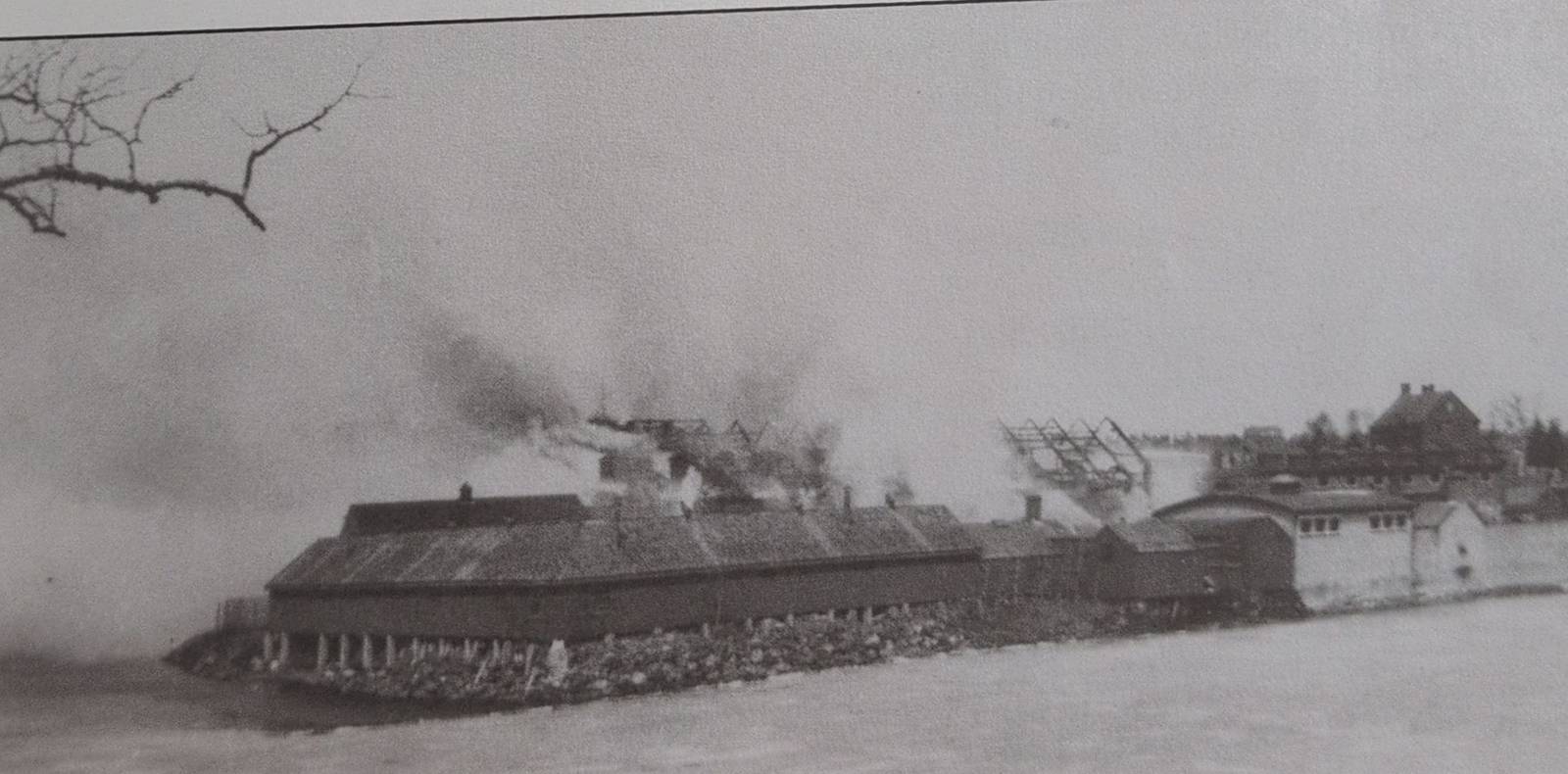
So when the prison burned in 1935, there was much debate about the island’s future. Would it remain a military site, or join the rest of the Arm as a place for recreation?
Navy or yacht club?
The island still belonged to the Department of National Defence, and rumours spread that the Navy wanted it for a training base. This caused immediate controversy. One Halifax paper, while supporting a strong Navy after two world wars, wrote that “the Arm is one of the few remaining beauty spots providing a natural recreation centre for the public, a naval establishment of any sort on its shores would be the thin edge of the wedge for further development of the same kind.” The Halifax Herald ran a large cartoon of a Navy vessel ploughing through the Arm and capsizing small sailboats.
Meanwhile, Armdale Yacht Club had been founded in 1937 by about 20 young sailors, including Jack Buckley, Jim Egan and Walter Piers. Its Act of Incorporation set out its purpose: “to promote yacht and boat designing, building and sailing, and to encourage its members to become proficient in the navigation, personal management, control and handling of yachts and boats of all kinds.” At first the club ran out of members’ homes, then from the Edmonds Grounds (now Regatta Point), charging members 25 cents a race.
By 1947 the club wanted room to grow and had its eye on Melville Island. The first recorded mention of its interest is a newspaper report of a council meeting on the island’s future, where the club’s commodore, H. E. Kearns, said the Navy had no “good excuse for intrusion” into the Northwest Arm.
After much debate, the island was leased to Armdale Yacht Club on December 20, 1947, for $1 a year. The lease was renewed in 1952 and, on June 20, 1956, replaced with a 99-year lease.
A new home
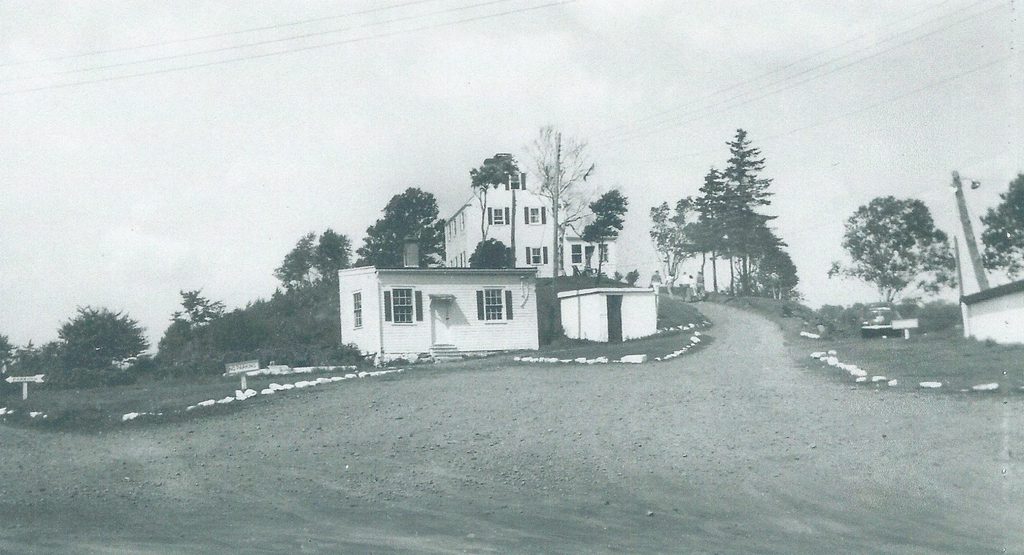
Members went to work on the island at once. The chief warder’s house was renovated as the clubhouse, which it remains today. Verandahs were added, the dining room was lengthened and the interiors were remodelled through the 1950s and 1960s. Members built floating docks on old rum and whisky barrels, and the stone prison became a storage building.
Melville Island and its surrounding waters became a fixture of Halifax sailing. Notable boats kept in its vicinity included Fish Feathers, owned by founding member Walter Piers, said to have helped recover bodies after the sinking of the Titanic; old rum-runners from the Prohibition years; and Pickle, a German yacht taken by the Navy as a war prize and rumoured to have belonged to Hermann Göring.
The club grew quickly. From about half a dozen boats in the 1930s, it had more than 200 sailboats and powerboats by 1960, and by 1952 it was running some 250 yachting events a season.